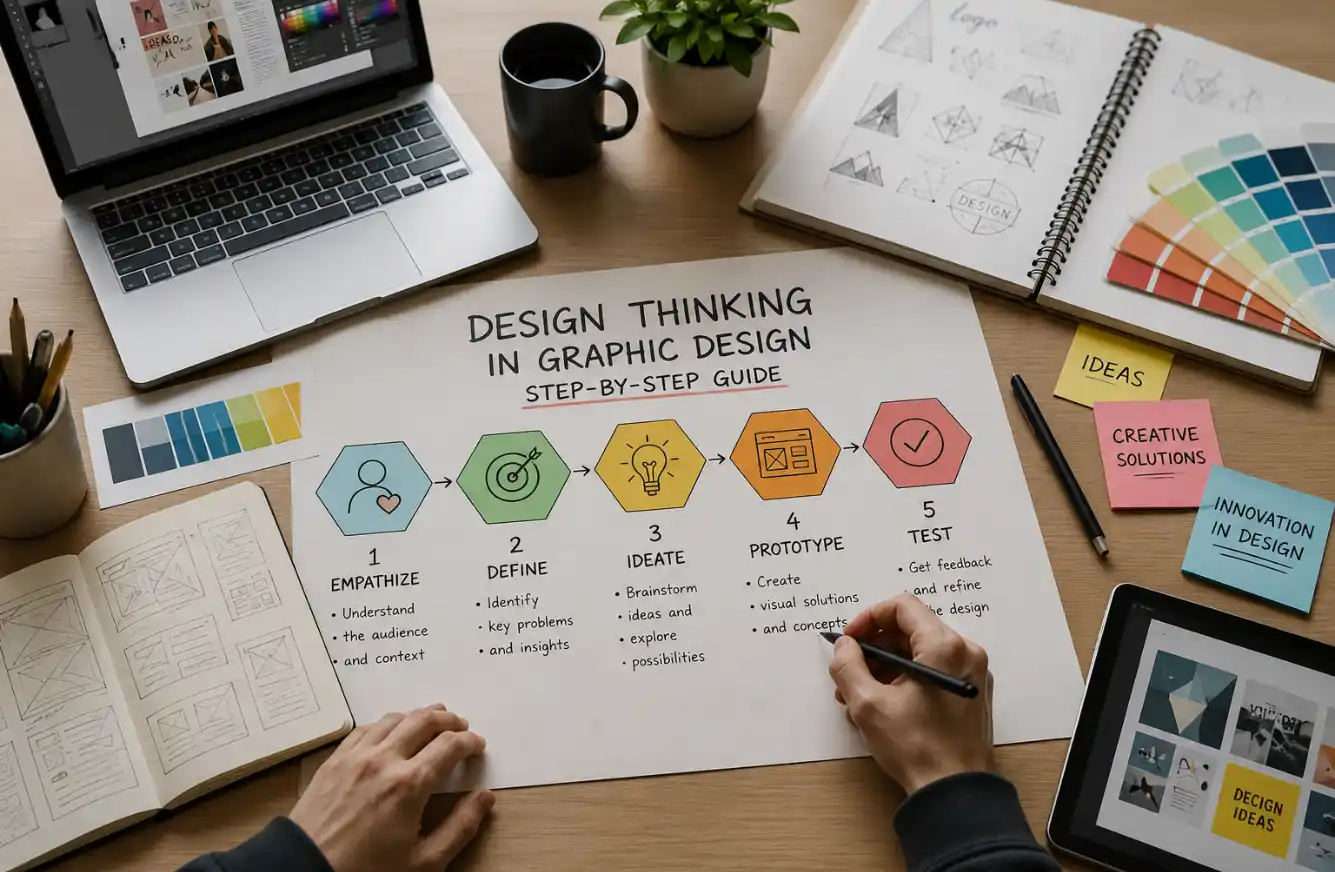
Design Thinking in Graphic Design: Step-by-Step Guide.
Some designs resonate with people while others just don't, why?
Design Thinking is frequently the key. Great graphic design is more than just colors and typography or pretty pictures. It is based on understanding people, problem-solving creatively, and the creation of meaningful experiences through design. But these days, brands require more than pretty graphics. They require innovative visual materials to communicate effectively with an emotional understanding of the audience and to communicate practically.
Design Thinking is a must-know process for designers in the contemporary creative industry aiming for innovative and impactful solutions. Dreaming up a logo creation, social community marketing campaign, packaging, or internet page, this process provides the means to help bring the ideas to the consumer.This guide will explain the concept of DT and its application in graphic design and in business for meaningful branding and customer engagement.
What is Design Thinking?
Design thinking is an effective and human-centered process for problem-solving! It emphasizes user understanding, the identification of user problems, idea generation, and testing of solutions prior to settling on a final design.
Designers don't design graphics directly; they first do their research on the audience and their needs. It is one way that a brand can develop a design that will be visually pleasing, meaningful, and effective.
In the field of graphic design, design thinking promotes thinking beyond aesthetics and towards the experience of the user, the message, and the usability. It is sure to add creativity and strategy and is one of the best tools for introducing innovations in design.
Why is Design Thinking Relevant to Graphic Design?
These visuals are what today's audience is used to dealing with daily. To be memorable, a brand needs to have a design that resonates with the customer on an emotional level and that makes sense.
Design Thinking can help designers to:
- Become more aware of audience behavior and better able to predict it
- Design user-friendly and meaningful graphics
- Improve brand communication
- Develop innovative concepts
- Be able to creatively address marketing and branding issues
It helps fulfill both the business and designer needs, as it makes the creative process organized and efficient.
Learn to See Things From the Listener's Point of View
The first step of the designing process is to deeply know the target group. Designers can proceed with a project only after considering questions such as:
- Who are they directing these products to?
- What kinds of issues are there?
- What sort of aesthetic appeal do they have?
- What happens when brands connect with them on the web?
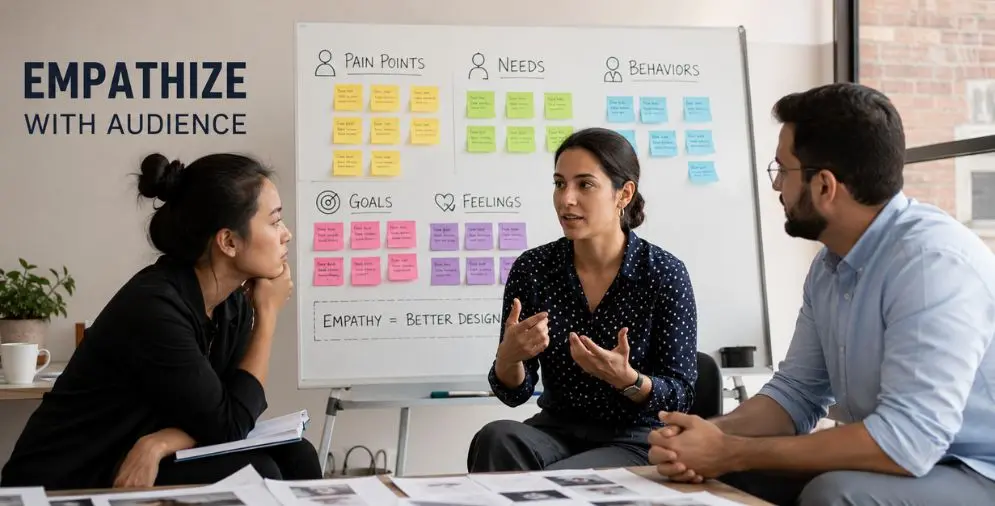
1. Empathize With Audience
The key at this stage is to observe and research. Designers gather information from customers, competitors, social media, and the market to develop their understandings.
For instance, if the brand is targeting the younger generation, the graphic design might have to be done in bolder colors, a fun kind of font, and innovative layouts. But, for business clients, simple and clean presentations may be appropriate.
Empathy FEELS authentic and related in visuals. A dilemma that must be resolved. A problem that needs to be clarified in
2. Determine the Actual Problem
Once information has been gathered, the next step is to determine the actual problem that needs to be fixed.
While for many businesses it is a matter of creating a logo or poster, the problem could be poor brand recognition, weak engagement, and unclear communication.This allows the designer to keep at hand the actual purpose and not just to make decorative graphics.
The problem statement might be, "How can a student determine if a survey is reliable and uses language that they can easily understand?A more attractive design style is required for the brand's social media platforms to gain more trust among customers, who are young professionals.
Correct challenge wording results in better, more strategic, and effective designs.
3. Generate Ideas Using Ideation Techniques
The stage of design where the designer generates and investigates various options and ideas. Designers do not immediately concentrate on one concept they have but allow their minds to roam across alternate solutions.
Examples of ideation techniques include word association, mood boards, mind mapping, brainstorming, and collaborative brainstorming.
Quality isn't the concern here; it is quantity. Sometimes it can be surprising and innovative as you explore areas of creative freedom.
For instance, in packaging a food product, one concept could be minimalism while another is vibrant illustrations. Taking several directions will help in finding the best concept.
During this stage, it is the creativity of the product design that flows freely, which is conducive to promoting innovative design.
4. Create Prototypes
When the best idea is chosen, the designers start to come up with sketchy versions of the design. Such entities are called prototypes.
Prototypes are used in order to imagine the ideas before making the product. Designers don't invest a ton of time in creating a single design upfront but rather try a few designs early and refine them gradually.This phase offers many advantages, such as preserving time, minimizing errors, and enhancing collaboration among client and designer.
5. Test and Improve
There's no design that is perfect at a single try. Testing will provide insight into the reactions people will have with the design and whether the purpose is accomplished.Feedback may be from clients/cards, team members, or focus groups. Designers watch users experience the design and make changes that improve their experience.
For example:
- Is the meaning clear?
- Are users interacting with the substance?
- Is the design suitable to the brand?
- Is the layout comprehensible?
The design evolved and was optimized based on feedback received.Testing allows you to make sure that the final product looks good, is functional, and works to your advantage.
How Design Thinking Promotes Innovation in Design
A key with design thinking is the focus on experimentation and new ideas.Most times, traditional design techniques are based on fashion or taste, but design thinking is based on considering the user aspects and creative approaches. This strategy results in distinctive branding concepts, enhanced storytelling, and increased customer interaction.
This concept usually results in memorable campaigns for brands that choose to use it, since designs are rooted in the perceived needs and emotions of people.Design thinking enables creative and strategic long-term promotion of the brand, starting from packaging and advertising through social media and online experience. The relationship between graphic design and design thinking will be discussed along with the future of graphic design.
With more competitive digital environments, businesses must have more intelligent communication in pictures. The audience today expects interactive, easy-to-use, and emotional experiences when it comes to brands.
That's why DT is now a fundamental component of graphic design. It makes designers make an impact rather than pretty websites.
This is helpful for startups and any business to improve their brand visibility, customer experience, and marketers' performance.
Conclusion
Design thinking is more than a creative method. It's a strategic method that makes graphic designing a great instrument to clarify issues. Adopting the perspective of the user, creating designs from a problem-solving standpoint, and applying ideation techniques and user experience testing will secure the visuals that the user will relate to.
Creativity and strategy go hand-in-hand for brands desiring to grow in this day and age. That’s where innovative solutions come into play, like that offered by Pro Element Creatives, one of India's leading performance marketing companies that helps companies shape their brand and make their message resonate with the masses.